What Communities Are Telling Us About Safeguarding: Why Trust Matters
For some communities, statutory safeguarding is perceived as judgemental, unsafe or risky, something that escalates situations rather than helps resolve them. This anticipation alone is enough to discourage early help-seeking. Where trust in institutions is fragile, people turn instead to those they know and trust: community groups, faith settings and local leaders.
The project also surfaced how abuse is often understood narrowly within communities themselves. Emotional, financial, digital and immigration-related harm were not always recognised as abuse or safeguarding issues. Caring pressures, fear of stigma and expectations to “cope quietly” can blur the line between support and harm, particularly for women, carers and for men whose experiences of abuse are often overlooked. Financial control, coercion linked to immigration status and carer exhaustion were frequently normalised or hidden behind expectations of endurance, sacrifice or “saving face”. Without culturally grounded conversations that start from how people understand their lives and responsibilities, these forms of harm can remain invisible.
Community leaders spoke openly about the strain of holding safeguarding concerns while trying to protect trust within their groups. Many feared that signposting to statutory services, without sensitive handling or ongoing relationships, could do more harm than good. As a result, leaders often become the first point of contact, absorbing risk and responsibility without clear, trusted advice routes. Harm is then pushed deeper into neighbourhoods rather than addressed early.
A clear message emerged: people assess risk, responsibility and help-seeking through cultural, religious and social frameworks, not statutory ones. The Raising Awareness of Abuse project shows that safeguarding messages fail not because communities “don’t understand” abuse, but because messages are rarely framed in ways that reflect people’s values, identities and lived realities.
Importantly, communities did not all want safeguarding framed in the same way. While many groups found messages resonated most when they were connected to shared moral values such as justice, compassion, care for family, dignity and mutual responsibility, one women’s group were clear that they did not want safeguarding framed through culture or religion at all. Instead, they wanted materials that spoke explicitly to women’s empowerment, autonomy and confidence, seeing safeguarding as about strengthening agency rather than referencing faith or tradition. This reinforced a core learning: effective safeguarding is not about applying a single lens, but about listening and adapting to how different groups want conversations to be framed.
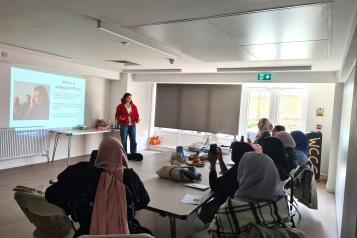
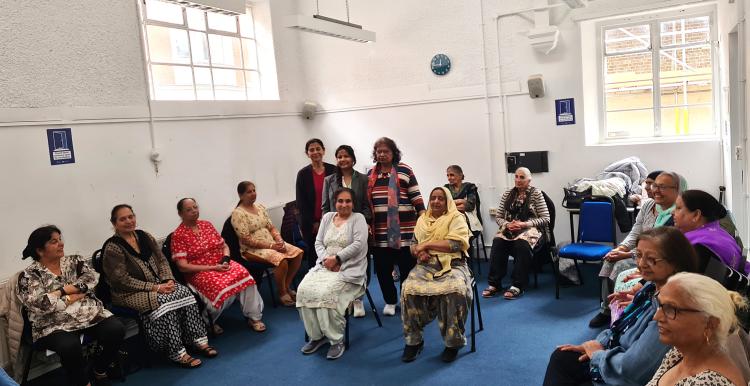
Through co-production, communities reshaped safeguarding content themselves, challenging language, tone and examples, and using wording that felt safe, relevant and respectful. Communities were clear about what works. Safeguarding messages need to sound human, not institutional. They need to be shared through trusted neighbourhood channels and leaders, in multiple languages, and in formats people actually use such as WhatsApp messages, short audio explanations and informal conversations, not just leaflets or one-off events. Trust is built over time, through repeated presence and relationships, not through campaigns or single awareness days.
This project highlights an important system insight: safeguarding cannot be effective if it is culturally neutral in design. Cultural neutrality is not inclusive, it actively excludes. If safeguarding is to work at neighbourhood level, it must be relationship-based, co-produced and values-led, shaped by how communities themselves want to engage.