Safeguarding starts with conversation: what we learned at St Peter’s Church in Woolwich
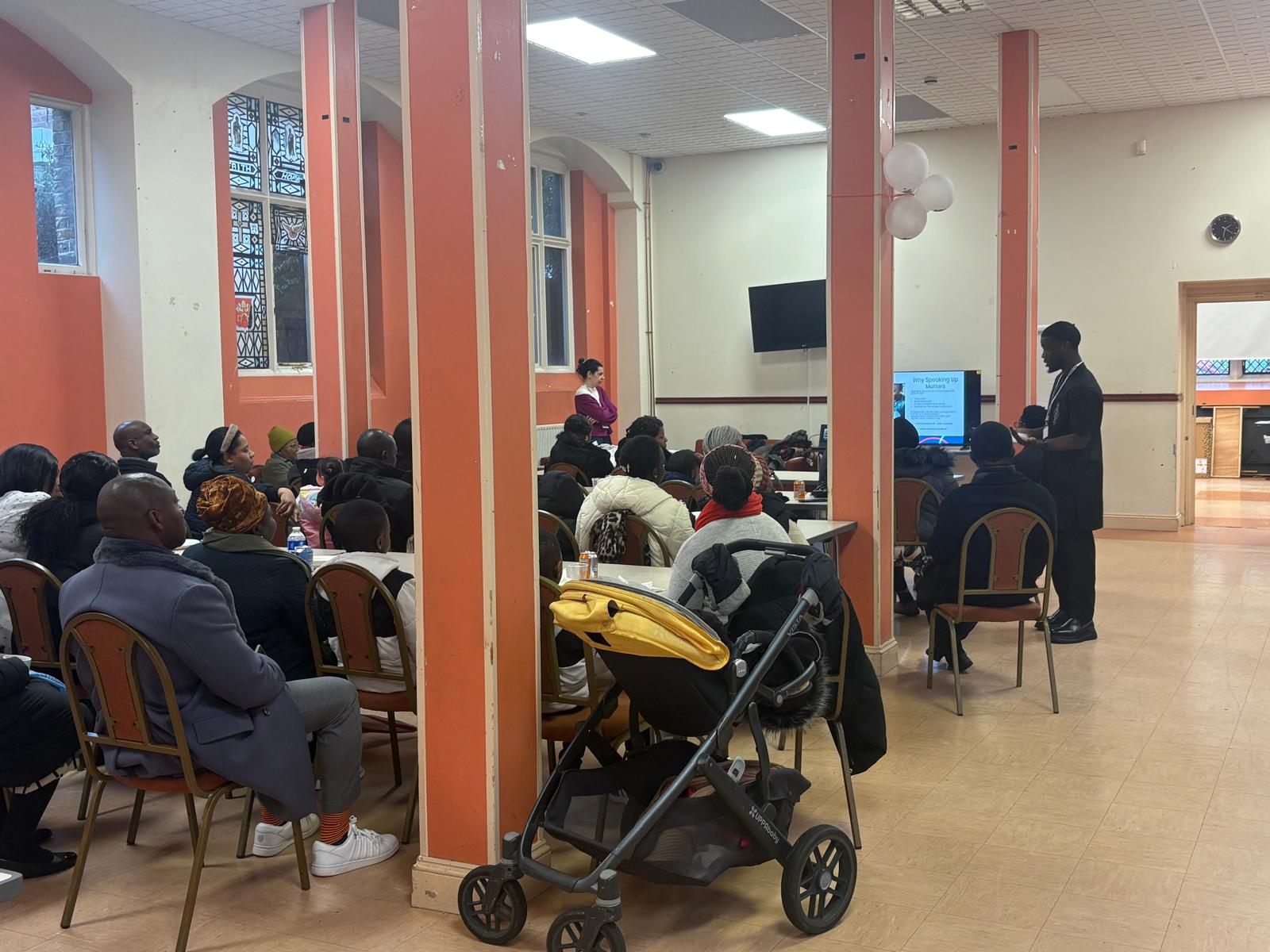
On Sunday 25 January 2026, as part of our Raising Awareness of Abuse project, Healthwatch Greenwich hosted a safeguarding awareness session at St Peter’s Church in Woolwich, following Sunday Mass. Around 60 local residents joined in — neighbours, faith leaders, and residents — many of who told us they had never before heard safeguarding explained in plain terms.
The atmosphere was calm and respectful: people asked questions, listened to one another, and reflected on what safety and support look like in everyday life. For many, the session turned a distant, technical term ‘safeguarding’ into something personal and shared. As one attendee shared, “I didn’t realise safeguarding was something we all have a role in. I thought it was only for professionals.”
That reaction matters because language shapes how people see problems and how they interact with them. Choosing words that centre dignity, collective responsibility and the wider social context makes it easier for communities to recognise harm and to feel safe asking for help.
This session was shaped by earlier co-production meetings with the community, who adapted safeguarding content themselves, challenging language, tone and examples, and using wording that felt safe, relevant and respectful in the Black Christian community.
Building trust and relationship is central to safeguarding
What people told us at St Peter’s confirmed what our community work has shown elsewhere: trust and relationship are central to effective safeguarding. Attendees spoke openly about the fear and frustration of trying to get help and being met with delay or judgement. One person described calling for help and “waiting and waiting” with no response.
Another reflected on how one bad experience can silence a whole neighbourhood: “After that, people were too scared to speak up. Still are.” These accounts underline a painful reality — when statutory services are perceived as risky or unapproachable, people turn inward to family, friends, faith groups and local leaders rather than to formal routes of support.
That’s why community spaces matter. The session created a safe place where people could name financial, emotional and caring pressures as forms of harm — things that are sometimes normalised or hidden behind expectations to “cope quietly.”
Attendees valued being listened to; many said simply being able to share their story reduced isolation and built confidence. Community-led conversations like this allow safeguarding to be framed in ways that reflect people’s lived realities and moral frameworks —through dignity, mutual responsibility, and compassion.
Learnings from the safeguarding session
Practical lessons from the session are straightforward and rooted in social justice: first, safeguarding messages must be co-produced with the communities they aim to serve. Co-production helps ensure language, examples and routes to support are culturally relevant and non-stigmatising.
Second, trusted local channels — community groups, faith settings, WhatsApp groups, informal conversations — need to be resourced and listened to, not bypassed. And third, responses must be relationship-based: people need ongoing presence and support, not one-off campaigns.
As an organisation committed to amplifying lived experience, Healthwatch Greenwich co-produced information leaflets with the community based on their inputs and feedback, which were distributed during the session. A video featuring relevant religious references from the community, formed a basis to support safeguarding messages, which is being circulated within their local WhatsApp group.
The St Peter’s community session was a reminder: safeguarding is not only about investigation and protection but also about preventing harm through community connection, clear language and shared responsibility.
Healthwatch Greenwich will continue to listen to communities. If you’d like us to work with your group or community to raise awareness for abuse, please get in touch.